
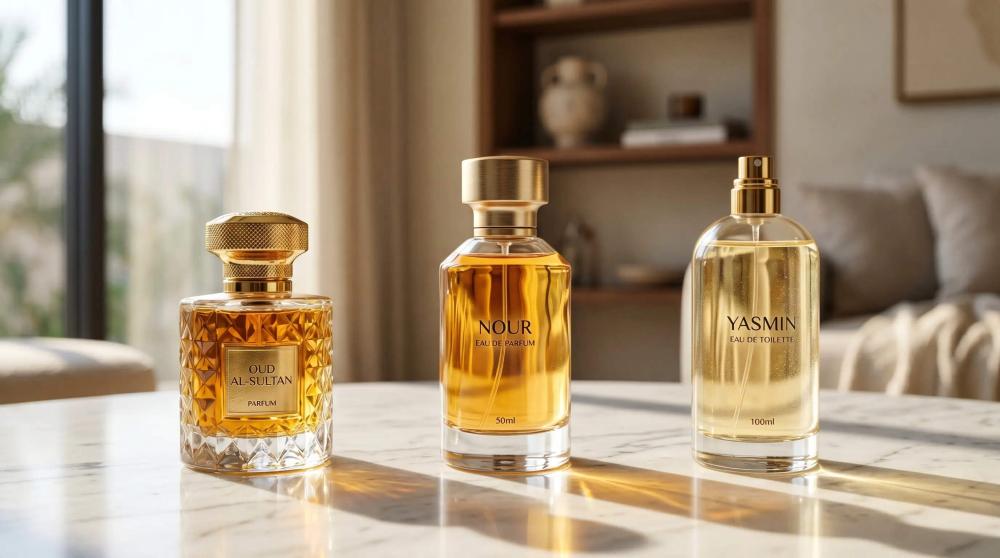
Perfume holds a deep and established place in Saudi culture. It's not merely a minor detail in everyday wear, but a personal signature, an integral part of hospitality and elegance during special occasions and holidays. In the Kingdom, we cherish scents that leave a lasting impression, whether they be authentic oud and oriental incense, or the latest releases from French and international perfume houses.
But how many times have you bought a wonderfully scented perfume, only to be surprised that its fragrance disappears as soon as you arrive at your workplace? Or perhaps you have wondered one day while shopping online: "Why is there such a big difference in the prices of perfumes even though they have the same name and the same brand?" The secret lies in a few small words usually printed on the bottom of the perfume bottle that indicate its concentration.
Therefore, with the help of experts at Bath & Body Works , we've put together this comprehensive guide that explains in detail the differences between perfume, eau de parfum, and eau de toilette. Understanding these differences will not only save you money but will also make you an expert at choosing the right fragrance for every time, every season, and every occasion.
What is the fundamental difference between perfume concentrations?
Before we delve into the details, we must understand how perfume is made. Any perfume you buy is essentially composed of two main elements:
- Raw fragrance oils: These are the basic substances extracted from flowers, woods, or manufactured in laboratories, and they give the fragrance its distinctive scent.
- The carrier material is usually a mixture of perfume alcohol and distilled water. The alcohol's function here is to dilute the fragrance oil (because it may cause skin irritation if applied undiluted), and more importantly, the alcohol evaporates upon contact with body heat, carrying the fragrance molecules with it and dispersing them into the air (which is what we call diffusion).
So, the difference between perfume, eau de parfum, and toilette lies simply in the percentage of fragrance oil compared to the percentage of alcohol and water. The higher the percentage of fragrance oil, the more concentrated the scent, the longer it lasts on the skin, and naturally, the higher the price due to the high cost of fragrance oils.
Types of perfumes in detail: Which one is best for you?
To answer this question, let's break down the world of perfume concentrations from strongest to lightest, to know when and how to use each type to get the most benefit.
1. Perfume (Parfum or Extrait de Parfum): Higher concentration and stronger lasting power
Perfume is the undisputed king of the fragrance world. It represents the purest and highest concentration commercially available for personal use.
- Concentration percentage: The percentage of essential oil in perfume ranges from 20% to 40%.
- Duration of persistence: Due to its low alcohol content, it evaporates very slowly, making it last for very long periods ranging from 12 to 24 hours, and its effect may remain on clothes for days.
- Sillage: Contrary to popular belief, perfume doesn't have the highest degree of sillage (difference in space), but rather it's an intimate fragrance that sits close to the skin. Those near you will smell it strongly, but it doesn't fill the room the moment you enter.
- Who is it for? People with sensitive skin (due to the low alcohol content), and those seeking absolute luxury.
- Why is it the most expensive? Because you are paying for pure and concentrated essential oils.
2. Eau de Parfum (EDP): The perfect balance
If you are looking for the magic wand that combines long-lasting fragrance with an affordable price, then Eau de Parfum is the top choice for perfume sales worldwide and at Bath & Body Works.
- Concentration percentage: ranging from 15% to 20%.
- Duration of staying power: Excellent, lasting 6 to 8 hours easily on the skin.
- The fragrance: It has excellent fragrance in the early hours thanks to the balance between alcohol and oil, which makes it leave a distinctive aromatic trail behind you.
- Preferred uses: Eau de Parfum is the joker; excellent for extended daily use, and very ideal for evening occasions, parties, and special evenings.
3. Eau de Toilette (EDT): The refreshing and invigorating option
The term toilet is derived from the French phrase "faire sa toilette," meaning to prepare or get ready (personal grooming). This type of toilet is designed to be refreshing and invigorating.
- Concentration percentage: ranging from 5% to 15%.
- Duration of stability: approximately 3 to 5 hours.
- The two fragrances: The eau de toilette boasts a very strong sillage for the first two hours. Due to its high alcohol content, the fragrance evaporates quickly and diffuses powerfully in the air, making you stand out the moment you arrive.
- Usage in Saudi Arabia: Saudi consumers strongly prefer this fragrance during the summer and daytime. It's the perfect scent for the office, university, or after the gym. It doesn't cause discomfort or headaches for those around you in enclosed spaces.
4. Eau de Cologne and Eau Fraiche: Rapid freshness
To complete the picture, we must mention these light concentrations.
- Cologne: Its concentration is from 2% to 4%, and it is usually used as a quick aftershave for men, or for quick refreshment, and it lasts for two hours.
- Eau de Parfum: Its concentration is only 1% to 3%, but the carrier material in it is usually water and not alcohol, which makes it excellent as a (Body Mist) for direct use on the skin and home freshness.
Quick comparison table: The difference between perfume, eau de parfum, and toilette
To make your choice easier while shopping at Bath & Body Works, we have summarized the differences in this comprehensive table:
How to choose the right type of perfume for the Saudi climate?
The climate in Saudi Arabia is diverse, but it is predominantly hot and dry in the summer in cities like Riyadh, and hot and humid in cities like Jeddah and Dammam. Temperature plays a crucial role in how fragrance interacts with your skin. Here's how to use the differences between perfume, eau de parfum, and eau de toilette to your advantage:
- On a hot summer day (during work and daily outings): The heat accelerates the evaporation of perfume. If you use a heavy perfume with oud or amber notes on a July day, the fragrance can become overpowering and unpleasant for you and those around you. The ideal choice here is an Eau de Toilette (EDT) with citrus (lemon, bergamot) or marine aquatic notes. It will give you an immediate freshness and evaporate smoothly with the heat.
- On summer nights and at outdoor events: you need something that lasts longer and leaves a lasting impression, and that's why Eau de Parfum (EDP) is the hero. It offers excellent staying power that withstands the evening humidity and a fragrance that will satisfy your taste.
- In winter, at weddings and formal occasions (engagements and marriages): The cold weather dampens the scent of perfume and prevents it from evaporating easily. Therefore, this is the perfect time to bring out your precious perfume bottle or a heavy eau de parfum filled with notes of wood, spices, and leather. The longevity will be legendary, and the fragrance will evoke a sense of warmth and luxury.
Golden tips to increase the longevity of perfume, regardless of its type.
Now that you know the difference, did you know that the way you use perfume can make an eau de toilette last longer than a perfume that's been used incorrectly? Here are the expert secrets for increased longevity:
- Spray on pulse points: Spray perfume on areas where veins are close to the skin's surface (wrists, behind the ears, inner elbows, and neck). The warmth of the blood in these areas acts as a natural vaporizer, diffusing the fragrance throughout the day.
- Fragrance layering trick: Perfume evaporates quickly from dry skin. The biggest secret to longevity is moisturizing. Use an unscented body lotion or cream (or one with the same fragrance) immediately after showering, then spray your perfume on top. The oils in the lotion will trap the fragrance molecules and prevent them from evaporating too quickly.
- Proper storage: The worst place to put your perfumes is in the bathroom or on a bedroom dresser exposed to sunlight! Humidity, temperature fluctuations, and light damage the chemical bonds of the essential oils. Store your perfumes in a dark, dry, and cool place (like a drawer or closet) to preserve their quality for years.
- Don't rub perfume! A common mistake is spraying perfume on your wrists and then rubbing them together. This generates heat that breaks down the top notes and disrupts the fragrance's structure. Simply spray the perfume and let it dry naturally.
Frequently Asked Questions
Does a higher price always mean a better fragrance?
Not necessarily. A higher price often reflects a higher concentration of essential oils (like in perfume), rarer ingredients, and higher packaging costs (brand). The best option is what suits your personal taste, the climate you live in, and your budget. A mid-priced eau de toilette might be "better" for your morning routine than an expensive perfume.
How do I know what concentration is written on the can?
You will always find words like (Eau de Parfum) or (Eau de Toilette) clearly printed either below the fragrance name on the front of the box, or on the transparent label located at the bottom of the glass bottle.
What is the best type of perfume for everyday use in Riyadh or Jeddah?
For hot, dry, or humid daytime weather, it's always best to use eau de toilette (EDT) or cologne with citrusy, refreshing notes, as it provides a feeling of cleanliness without being overpowering. For evening, you can switch to eau de parfum (EDP) for longer-lasting fragrance.
Shop smart and create your signature fragrance
Ultimately, a complete understanding of the difference between perfume, eau de parfum, and eau de toilette transforms you from a casual consumer into a discerning shopper who knows where to invest their money and how to choose a fragrance that perfectly suits their daily needs. Remember, an evening perfume isn't suitable for sports, and an eau de parfum for the office might not hold up at a wedding reception.
We are at Bath & Body Works We are always keen to provide the finest perfume collections in various concentrations to suit all tastes and occasions in the Kingdom.
What's your preferred fragrance concentration? Do you lean towards the longevity of a perfume or the freshness of an eau de toilette? Share your opinion in the comments, or start your journey to discover your next fragrance now by browsing. Our online store , where quality and reliability are in every drop.